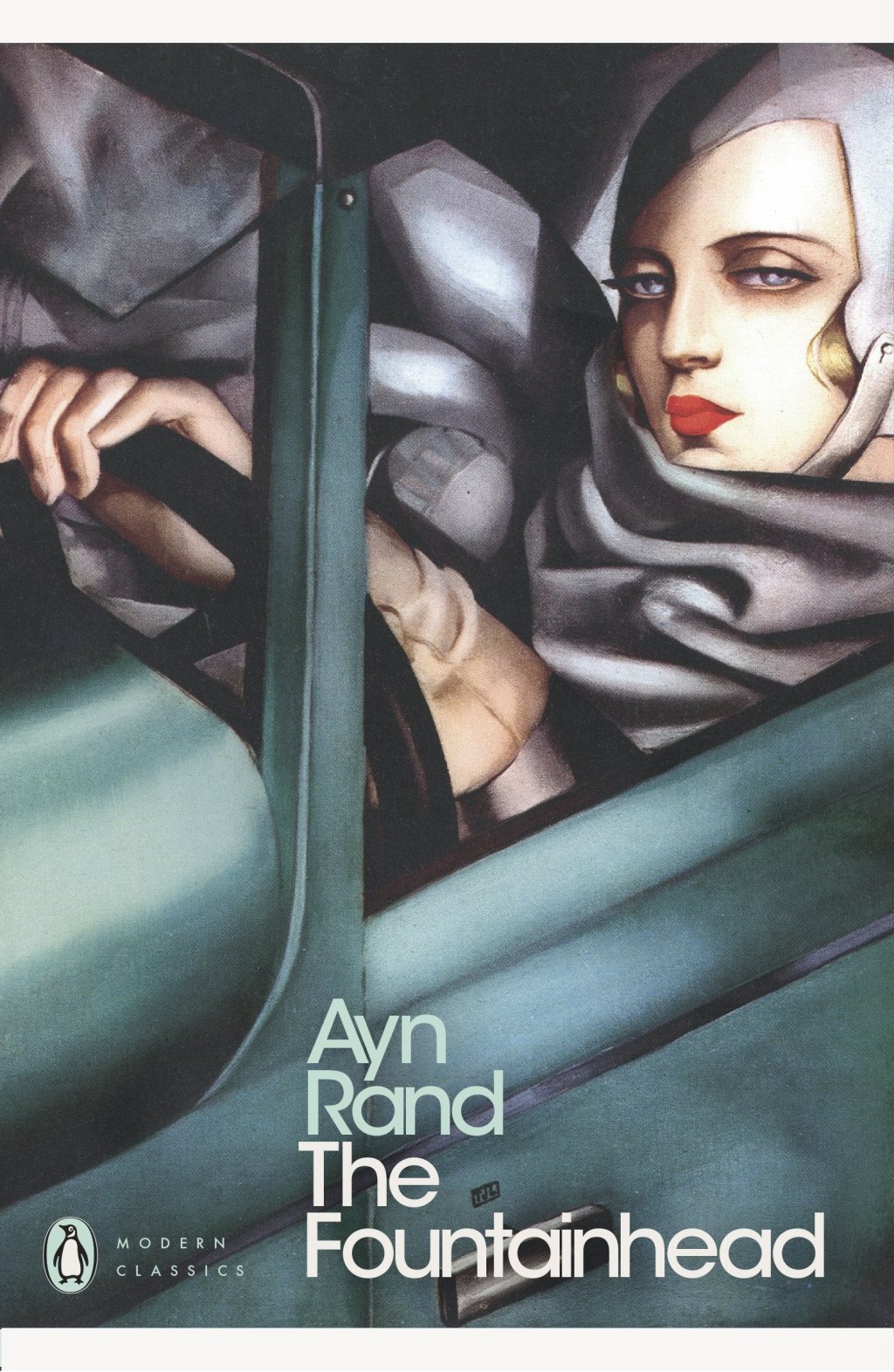
Rating: 4/5
Genre: Psychological Fiction
The Fountainhead is an invigorating look at Rand’s philosophy Objectivism, portraying the merciless yet hopeful character that is unbound from the shackles of society.
“Have you felt it too? Have you seen how your best friends love everything about you- except the things that count? And your most important is nothing to them; nothing, not even a sound they can recognize.”
Ayn Rand has been an author I’ve heard tons about even before I actually picked up one of her books. Online, I would often encounter mixed opinions and thoughts on her philosophy and how she uses stories as a medium to reflect her ideology and beliefs, something that definitely shaped how I thought about her, both for the better and worse. In all honesty, I was very much skeptical opening up the first pages of this book, jammed with black letters to the brim, wondering if I would enjoy the experience going forward. The length, almost 700 pages long, didn’t help that worry. But now that I’ve (finally) finished this book, I can confidently say that it was the most interesting, thought-provoking book I’ve read so far in my life.
“To say “I love you” one must know first how to say the “I”.”
Now, why do I think this way? Well, the biggest reason is that The Fountainhead is the first book I’ve read that has its philosophy at its front. Unlike other stories that have plot, characters, or even worldbuilding as their main focal point, Ayn Rand is almost merciless in how she pushes readers to understand how she thinks of the world. Every action, dialogue, and event is full of meaning that seems to drip with Rand’s perspective. Sometimes, it’s almost as if you are violently hit by how complex, and how dense, she can be in order to get her point across.
“I regret nothing. There have been things I missed, but I ask no questions, because I have loved it, such as it has been, even the moments of emptiness, even the unanswered-and that I loved it, that is the unanswered in my life.”
Ayn Rand’s philosophy, Objectivism, which centers on the principles of reason, individual rights, and self-interest, allows her to make each character a pawn in her game, every single one of them representing a different idea. Roark, the main character, embodies what she calls the “ideal man,” unbound by the shackles and expectations of society. He relentlessly aims to create original art that pushes the boundaries of those around him and doesn’t allow people to stop him from achieving full autonomy. Dominique, the anti-hero, struggles to reconcile beauty in a world where she believes it cannot survive. But as the story progresses, she slowly comes to realize that a force such as Roark can and will persevere, and she serves to represent the inevitability of Rand’s ideology. And Keating is the opposite of Roark: he is made and defined by what others think of him, and he does everything to gain prestige and recognition in others’ eyes. Until he loses himself. The proud Ellsworth, the seemingly greedy but still hopeful Wynand, and the genius sculptor Mallory each symbolize a fracture of Rand’s grand ideology.
Though I will not touch on the plot specifically, certain moments (such as Roark’s refusal to say anything during his first trial) gave me goosebumps while reading. It was so invigorating seeing such a character be steadfast in his beliefs and not let others pull him down. No matter if you agree or disagree with Rand’s philosophy, it was almost admirable to experience Roark’s confidence when the entire world seeks to destroy the very thing he wants to be.Ultimately, The Fountainhead is a decisive book that has created countless debates for decades. However, no matter what you believe, being exposed to such a complex and interesting philosophy was a great experience, and I recommend this to those who want a story that is thought-provoking. ⅘.
“To sell your soul is the easiest thing in the world. That’s what everybody does every hour of his life. If I asked you to keep your soul – would you understand why that’s much harder?”
 colinbooks
Leave a comment