Genre: Mystery
Rating: 4/5
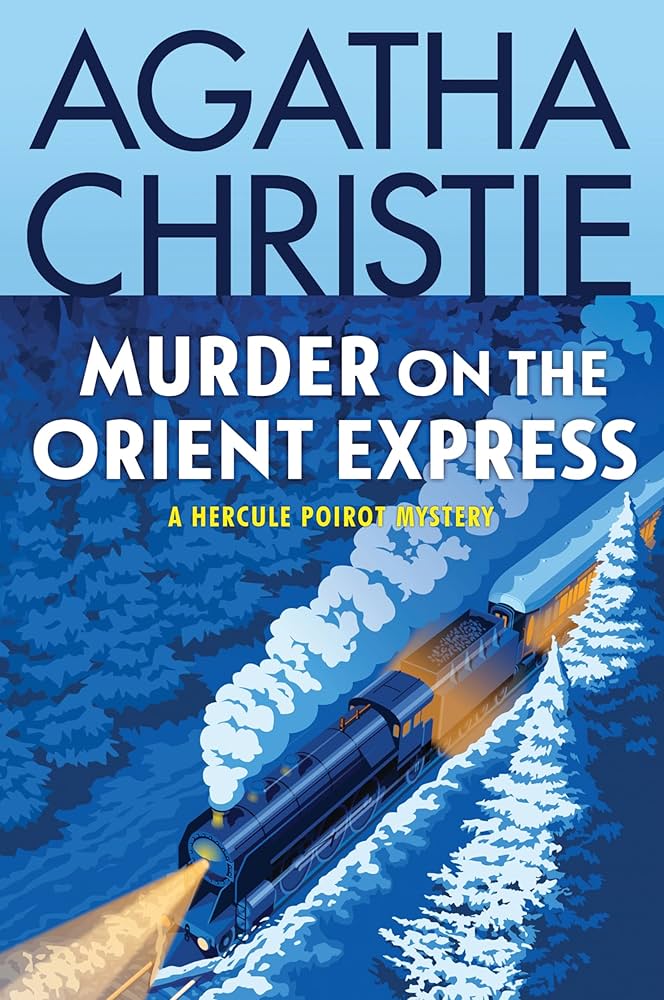
Murder on the Orient Express is a timeless and unsettling pillar of the mystery genre, one that lingers in your mind long after the last page is turned.
Mystery is a genre I don’t often allow myself to enjoy. Although I do appreciate it as a side-plot or a complementary storyline, I’ve always felt that mystery alone couldn’t hold my attention as the sole focal point of a book. For the most part, I think this preference stems from the reason behind my enjoyment of reading; unlike others who love dissecting and analyzing clues throughout the story to predict what will happen next, I am simply here for the fun. I let the story lead me, and I like to turn my mind off, appreciating it for what it is, nothing less and nothing more. And thus, for a genre like mystery that requires an extensive amount of thinking and keeping track of all the elements presented (the opposite of what I’ve come to expect from the books I enjoy), I feel a certain unfamiliarity that is hard to overcome. Well, with one exception: Agatha Christie.
“But I know human nature, my friend, and I tell you that, suddenly confronted with the possibility of being tried for murder, the most innocent person will lose his head and do the most absurd things.”
If you are even a little bit involved in the literary world, you should’ve heard Agatha Christie’s name at least once. She is widely regarded as one of the most prominent and influential mystery writers, and I’ve always considered her an author who transcends the genre into something more, a type of story that anyone could enjoy. And as someone who read And Then There Were None and was completely blown away by her masterful control over clues and suspense, Murder on the Orient Express felt like returning home. There is something about Christie’s books that pulls you into a trance, where you simply can’t stop reading, flipping through page after page until you’ve reached the end.
“If you confront anyone who has lied with the truth, he will usually admit it – often out of sheer surprise. It is only necessary to guess right to produce your effect.”
To me, the most striking element of my experience was how clever Christie is. As I had already watched the movie adaptation and knew the ending, I couldn’t help but perceive the clues and red herrings she plants almost backwards. I found it incredibly engrossing to see how perfectly the puzzle pieces fit, even when a first-time reader might miss them. She gives you just enough to stay interested, but not enough to allow you to solve the mystery. I am reasonably certain that no living (or dead) author could match her talent in creating the perfect tone and environment, where you feel trapped in a dark maze, not knowing what to expect on each page, only to be completely surprised by the reveal at the very end.
One other thing that stands out in all of Christie’s works is the length of her stories. Murder on the Orient Express, specifically, in just under 300 pages, carries a substance that feels almost underserved by its small page count. Christie doesn’t waste a single word, and every one of them advances the characters in such a way that you can practically imagine them on the train, sweating not to be found out. From the detective to the passengers, you feel as if you’ve known them through their anxiety and turbulence, and even if they might commit the murder of a man, you just might forgive and justify it.In conclusion, Murder on the Orient Express is a compact masterpiece that proves even someone like me, who doesn’t often gravitate toward mystery, can be utterly spellbound by Christie’s craft. ⅘.
“The impossible could not have happened, therefore the impossible must be possible in spite of appearances.”
 colinbooks
Leave a comment