Genre: Historical Fiction
Rating: 5/5
Small Things Like These is a stark reminder that kindness, though small, can be a radical act against cruelty.
“The worst was yet to come, he knew. Already he could feel a world of trouble waiting for him behind the next door, but the worst that could have happened was also already behind him; the thing not done, which could have been – which he would have had to live with for the rest of his life.”
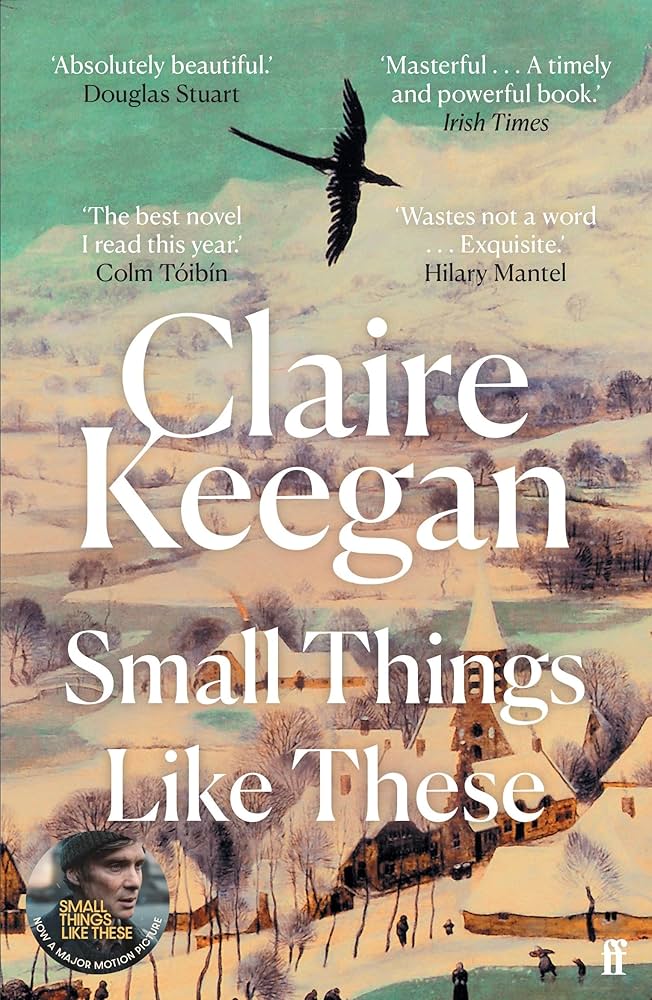
People, especially those in the literary community, often have a tendency to push the narrative that a book cover can’t represent the quality of the content inside. I’m sure everyone has heard it: the ancient and wise saying of “don’t judge a book by its cover.” Well, in my opinion, that’s a very flawed argument.
Let me explain myself: the cover is a part of the book, and no matter how you paint it, it inevitably affects the experience of the reader picking it up. Of course, whether you like the book shouldn’t depend on a mere picture, but when it comes to choosing a book to read? I actually think judging by the cover should be encouraged. Most of the time, it’s the only metric you have before diving in, and I’ve found it really helps when there are so many choices. That’s exactly what happened with Small Things Like These: the painting-esque cover, with its almost nostalgic depiction of winter, piqued my interest right away. Call me shallow, but I couldn’t help but appreciate how beautiful and aesthetic it was, and so, I decided to read it.
As they carried along and met more people Furlong did and did not know, he found himself asking was there any point in being alive without helping one another? Was it possible to carry on along through all the years, the decades, through an entire life, without once being brave enough to go against what was there and yet call yourself a Christian, and face yourself in the mirror?”
Small Things Like These is an absolutely heartbreaking story. Set in a small Irish town in 1985, our main character, Bill Furlong, sheds light on the Magdalene Laundries, Catholic institutions that trapped “fallen women” into forced labor and harsh conditions. Throughout the story, Furlong meets several women confined in his local Church and tries to help them, despite the Church’s efforts to hide them and keep them in obscurity.
There’s something frightening about how hidden these elements are. Even within the story itself, everything is shrouded in mystery, and we never get full answers on how or why these women are treated so inhumanely. When people ask questions, others are quick to shut them down, choosing to ignore it rather than face the uncomfortable truth. Especially when everyone is already struggling to feed themselves through the cold and famine, it’s chilling to see how willing people are to turn a blind eye when it doesn’t directly affect them.
“It was easy to understand why women feared men with their physical strength and lust and social powers, but women, with their canny intuitions, were so much deeper: they could predict what was to come long before it came, dream it overnight, and read your mind.
One moment that stuck with me was when Furlong told his wife, and the mother of their children, about what he had witnessed. Instead of being shocked, she seems to already know what’s happening, and simply says, “at least it isn’t our children.” That line was haunting. The way this story was handled, with its subtle yet terrifying underlying message, was wrapped in such beautiful prose. Claire Keegan is an incredible writer, and not a single word was wasted in this 200-page story.
In conclusion, Small Things Like These is a harrowing look at humanity’s cruelty in times of adversity, showing that even the best people can inflict or ignore the worst things. An absolute must-read. 5/5.
“he found himself asking was there any point in being alive without helping one another?”
 colinbooks
Leave a comment