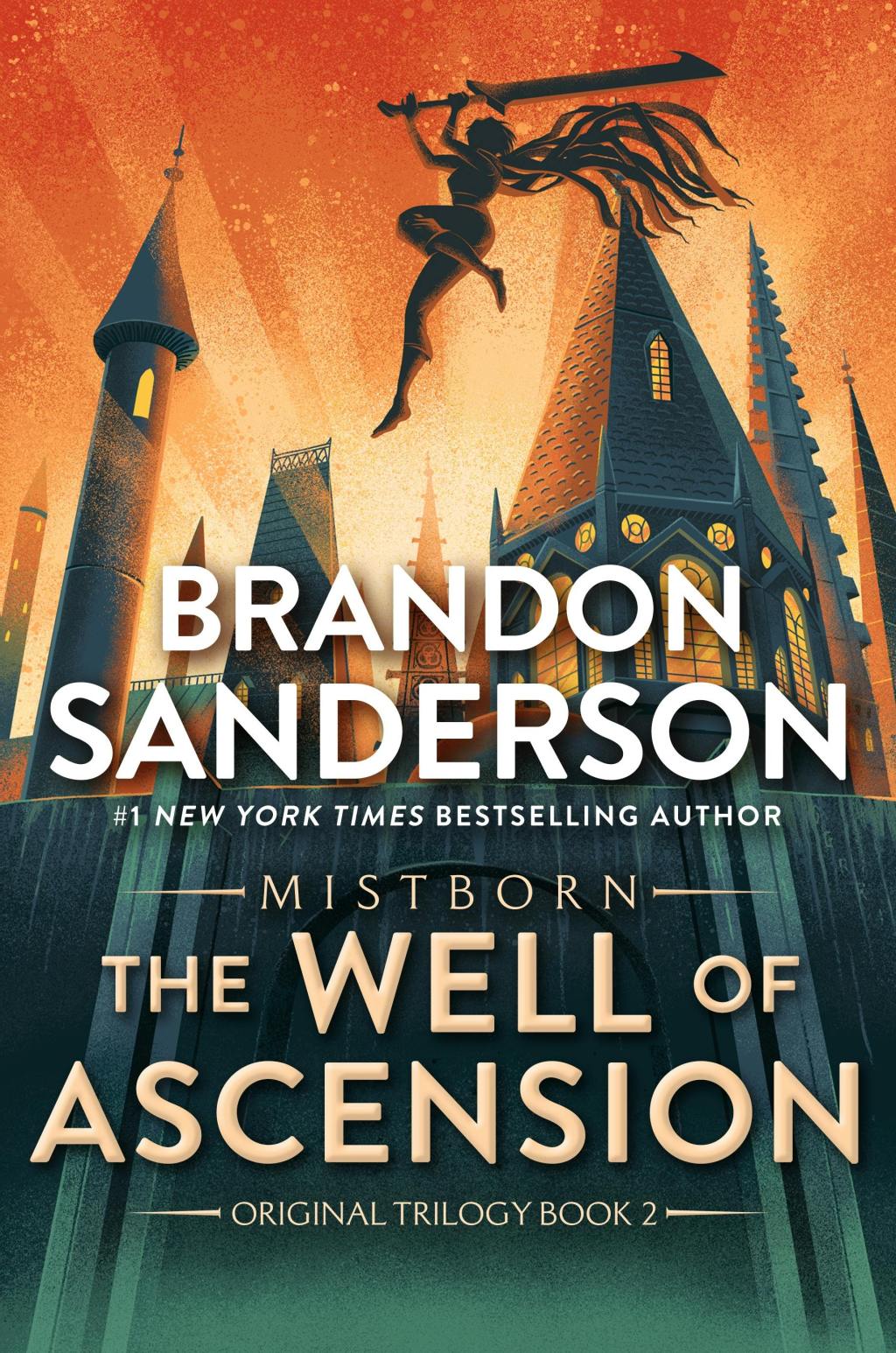
The Well of Ascension is an incredible addition to the Mistborn trilogy, further enriching the characters we cherish and exploring the political intrigue of Scadrial.
Genre: Fantasy
Rate: 4/5
“A man was defined not by his flaws, but by how he overcame them.”
The Well of Ascension, the second installment to the Mistborn trilogy, is a somewhat polarising addition to the story; unlike the action-packed plot of the first book, this book puts a lot of emphasis on politics, and a slower progression of all character arcs and events, where the excitement largely present in The Final Empire takes a large step back. I think that this characteristic makes readers either appreciate the time we spend with our beloved crew, or dislike the amount of pages that it takes to get to the ending, which I’ve noticed divides the overall sentiment regarding the story. Weirdly enough, I’ve always had a soft spot for how much Sanderson is willing to build momentum for every aspect of his craft; I think it takes a lot of guts to really control the narrative as he’ve done in The Well of Ascension, something that comes with a rather big mix of pros and cons.
“A man can only lead when others accept him as their leader, and he has only as much authority as his subjects give to him. All of the brilliant ideas in the world cannot save your kingdom if no one will listen to them.”
When discussing how much I’ve enjoyed this book, it would be foolish to assume I didn’t have a fantastic time with it. It is, after all, a Sanderson book. I’m convinced that I will never not love a Cosmere tale written by him, which speaks volume to the trust he has built between him and I regarding his quality of work. Therefore, I want to start off by talking about what he did right with this book. Firstly, I absolutely loved how much character development and interactions he had given us; I think that every single member of the cast gained a deeper sense of self, and as a reader, they became more humane and… real. Take Sazed, for example. In the previous installment, although we’ve seen some glances at his morals and values, this book paints who he really is in a more realistic manner. The way he struggles to balance his desire to become a scholar simultaneously with his want to explore the world and its mysteries was something I really appreciated. His never-wavering commitment to religion, and doing what is essentially “right”, was deeply heartfelt to experience. Additionally, his relationship with Tindwyl was, personally, very well done; I’ve noticed that Sanderson is sometimes not the best at writing romance between characters, but Sazed and Tindwyl’s bond was incredibly executed, as I couldn’t help but smile everytime we got the opportunity to see them together. This book is filled with these little moments, across characters, that just enriched personality and motivations so much. Although I can’t write about all of them, Breeze’s secret heart he hides behind a sarcastic mask, Vin and Elend’s slow realisation and reconciliation with who they are and want to be in this newly found society, and Zane’s unknown madness, were all spectacular depictions that really spoke to me. This aspect was by far my favorite thing about this book.
As I’ve said in the first paragraph, Sanderson decides to approach the plot with subtlety. For about the first 90 percent of pages, our crew is focused on navigating the new political landscape of the society they helped conquer and build. Elend, who had been crowned king and wrote the very laws of the kingdom he now serves, finds himself struggling to maintain his grip on the population without compromising the freedom to the Skaa. That’s when three separate armies march on his city of Luthadel, wanting to take over and get the storage of Atium that they suspect is located there. The story takes a lot of time to explore the tensions between these four forces, and takes our crew into a rather political journey. I must say that this choice was a double-edged sword; while I can appreciate the effort taken to create the sense of momentum for the final “Sanderlanche”, I can’t ignore the fact that some parts were inevitably boring. I’ve felt like the mystery was not resolving as quickly as I hoped it would, and I sometimes found myself hesitating to continue reading the book.
In conclusion, The Well of Ascension was a fantastic installment to the trilogy that developed the characters in significant ways, but ultimately suffered with slower pacing and plot progression. I personally still liked the experience, and would definitely recommend readers to continue the series. ⅘.
“…A man can only stumble for so long before he either falls or stands up straight.”
 colinbooks
Leave a comment